


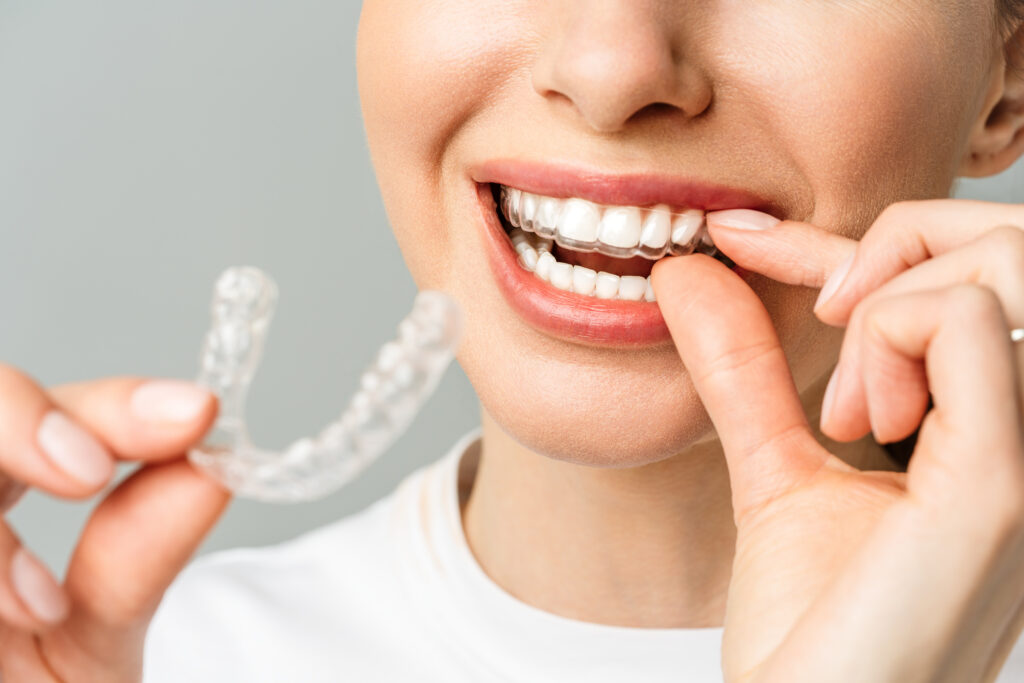
If you have started researching Invisalign, or you are already in treatment, you may have noticed small, tooth-colored bumps attached to certain teeth beneath your aligners. These are called Invisalign attachments, and while they might seem like a small detail, they play a significant role in how effectively your treatment works.
Embrace Your Smile helps patients throughout Santa Clarita understand every part of our specialized orthodontic treatment options, including the details that often go unexplained. Call us today at (661) 259-2388 if you have questions about attachments or Invisalign treatment in general.
A Quick Look at How Invisalign Works
Invisalign treatment uses a series of clear, custom-made aligner trays that gradually shift teeth into their desired position over time. Each set of aligners is worn for a set period, typically about one to two weeks, before being replaced with the next set in the series, with each new tray making small, incremental adjustments toward the final result.
What Invisalign Attachments Actually Are
Invisalign attachments are small, tooth-colored shapes made of dental composite material that are bonded directly to specific teeth during treatment. They are designed to blend in with your natural tooth color, making them far less noticeable than traditional orthodontic hardware, though they can sometimes be visible up close, particularly when aligners are removed.
Why Orthodontists Use Attachments
Attachments are not used in every case, but when they are, they serve specific mechanical purposes that help the aligners do their job more effectively.
Guiding Complex Tooth Movements
Certain tooth movements, such as rotating a tooth, extruding it further out of the gum line, or moving it in a more complex direction, require more precise force than a smooth aligner alone can generate. Attachments give the aligner tray something to grip and push against, allowing for more controlled and predictable movement. According to research on clear aligner attachments, these small additions can meaningfully improve the accuracy of complex tooth movements compared to aligners used without them.
Improving Aligner Grip and Retention
Beyond guiding specific movements, attachments also help the aligner tray fit more snugly and securely over the teeth. This improved retention helps ensure the aligner is exerting consistent, even pressure throughout the day, which supports more predictable progress from one set of aligners to the next.
Types of Invisalign Attachments
Not all attachments are shaped or positioned the same way, since different tooth movements call for different designs.
Conventional vs. Optimized Attachments
Invisalign offers different types of attachments depending on the specific movement needed. Conventional attachments are typically used for more general tooth movement, while optimized attachments are shaped and positioned specifically to address more complex or precise movements, such as rotating a rounded tooth or achieving a particular vertical movement.
Your orthodontist determines which type, and how many, your treatment plan requires based on your specific case.
What to Expect When Attachments Are Placed
Placing attachments is a quick, painless process performed in the orthodontic office. A small amount of composite material is applied to the designated teeth, shaped using a template, and then hardened using a curing light.
The entire process typically takes only a short amount of time and does not require any anesthesia. Once placed, your aligners will fit around these attachments, working together to move your teeth according to your treatment plan.
How to Eat, Clean, and Care for Your Attachments
Caring for teeth with attachments is largely similar to standard oral hygiene, with a few additional considerations.
Attachments are quite durable, but you should still avoid biting into very hard or sticky foods that could dislodge them. Brushing thoroughly around each attachment helps prevent plaque buildup, since these small raised areas can be slightly more difficult to clean than a flat tooth surface. Using a proxy brush or interdental brush around attachments can help reach areas a standard toothbrush might miss.
Attachments vs. Buttons vs. Elastics
Attachments, sometimes referred to as buttons, are bonded directly to the tooth surface and work with the aligner tray itself to guide movement.
Elastics, by contrast, are small rubber bands that connect specific attachment points, often between upper and lower teeth, to help correct bite alignment issues.
While attachments assist with individual tooth movement, elastics address how the upper and lower teeth fit together as a whole. Some patients require attachments, elastics, or both, depending on the complexity of their specific case.
Schedule a Consultation With Embrace Your Smile
Whether you are considering Invisalign treatment for the first time or have questions about attachments during your current treatment, our team is here to help. Dr. LeCornu and Dr. Asinas bring more than 75 combined years of orthodontic experience to every patient's care, and along with a team of 22 skilled assistants, they have helped transform more than 9,000 smiles and earned the title of Santa Clarita's "Best Orthodontist" for 15 years running.
Our mission is to provide comprehensive, artistic orthodontic care with personalized, minimally invasive solutions, whether that means Invisalign, attachments, or traditional braces. We also understand that busy families do not have time to spend waiting in a lobby, which is why we work hard to keep appointments running on time.
You can review our Invisalign cost calculator to get a better sense of what treatment may involve, or browse real case results from patients we have treated. For families wondering about timing, our guide on early orthodontic evaluation is also worth a look.
Contact our office at (661) 259-2388 to schedule a consultation and find out whether Invisalign, with or without attachments, is the right fit for your smile.
Frequently Asked Questions
Does Everyone Need Invisalign Attachments?
No. Whether you need attachments depends on the specific tooth movements required by your treatment plan. Some patients complete treatment with few or no attachments, while others require several to achieve the precise movements needed for their case.
Can People Tell I Have Attachments?
Attachments are tooth-colored and designed to blend in with your natural teeth, making them far less noticeable than traditional braces. That said, they can be slightly more visible up close or when your aligners are removed, though most people find them far less noticeable than they initially expect.
Do Attachments Hurt?
Placing attachments is a painless process, and most patients do not experience discomfort from the attachments themselves once they are in place. Some patients notice mild pressure or sensitivity as aligners shift teeth, similar to what is typically experienced during any phase of orthodontic treatment.
What Happens If an Attachment Falls Off?
If an attachment falls off, it is important to contact your orthodontist's office promptly. Depending on where you are in your treatment plan, your orthodontist may need to replace the attachment to keep your treatment on track. Continuing to wear your aligners as instructed and reaching out quickly helps minimize any disruption to your progress.